The Hire That Stays: A Buyer’s Guide To Direct Hire Staffing Services

A hands-on guide to permanent direct hire services that deliver long-term fit, measurable outcomes, and real business impact (includes 2 checklists).

The State of Permanent Hiring: Overview

Most permanent hiring processes are losing their best candidates before the search has properly begun.

SHRM research puts the average time to fill a permanent role in the United States at 44 days. Industry data consistently shows that top candidates are off the market in roughly 10 days. That 34-day structural gap sits at the center of why so many permanent searches end in compromise, and why closing it requires more than pushing harder on the same process.

The cost of an open seat adds to the pressure. SHRM data via Mitratech estimates that every unfilled role costs organizations between $4,000 and $9,000 per month in lost productivity and delayed output. For senior and business-critical positions, that figure is considerably higher.

The hiring environment has also produced a quality paradox that makes sourcing harder than headline volume numbers suggest. Application pipelines have grown in many markets, driven by economic uncertainty and AI-generated applications entering at scale, but more submissions have not brought better candidates. Recruiting teams are spending more hours filtering weaker applications, while the professionals genuinely worth pursuing remain employed and largely unreachable through standard outreach. The labor market has become unusually static over the past two years. Skilled professionals are holding positions they would otherwise leave, waiting for greater stability before committing to a move.

That latent dissatisfaction exists across most industries and most role levels, and it rarely surfaces through job boards or inbound applications.

For TA and HR leaders, these conditions have raised the bar for what permanent direct hire staffing services need to deliver. The organizations making consistently strong permanent hires are working with a fundamentally different level of sourcing depth and process rigor, and the quality of their outcomes reflects that difference.

“Top candidates are off the market in 10 days. Most hiring processes take 44. That gap is where permanent hiring breaks down.” 

When to Bring in Direct Hire Staffing Agencies 

The question most TA leaders ask when considering an external direct hire partner is whether they can justify the cost. The more useful question is whether they have accurately calculated the cost of not using one.

SHRM benchmarks put the average cost per hire in the United States at $4,700 to $4,800, a figure that covers only the visible expenses. What it rarely accounts for is the productivity loss from an open seat, the manager hours absorbed by a prolonged search, or the full cost of a mis-hire that resets the process entirely. When those factors enter the calculation, the economics shift considerably.

The scenarios where direct hire staffing services deliver the clearest return share a common characteristic: the role matters enough that getting it wrong costs more than getting it right with outside help.

To get a better idea of when this might apply to you, here’s a helpful breakdown of when you would want to consider a direct hire staffing service and when you would want to rely on internal hiring.

When to Use Internal Hiring
The role is well-defined and frequently filled
Active applicants are sufficient for a shortlist
The team has capacity and role-specific knowledge
Previous searches for similar roles have worked
When to Use a Direct Hire Service
The role is specialist, senior, or rarely filled
The best candidates are passive and do not apply
Requisition loads are high, or timelines are compressed
Previous searches for this type of role have stalled

Under the contingency model, the fee is paid only on a successful placement, typically 15 to 25 percent of the placed candidate’s first-year salary.

Framed against the cost of a prolonged vacancy and the risk of a mis-hire, that structure functions as a performance-linked investment in getting a consequential decision right the first time.

How Do Direct Hire Staffing Services Work? 

Knowing what a good external partner should bring is one thing. Understanding how that actually gets executed is what separates a credible evaluation from a leap of faith.

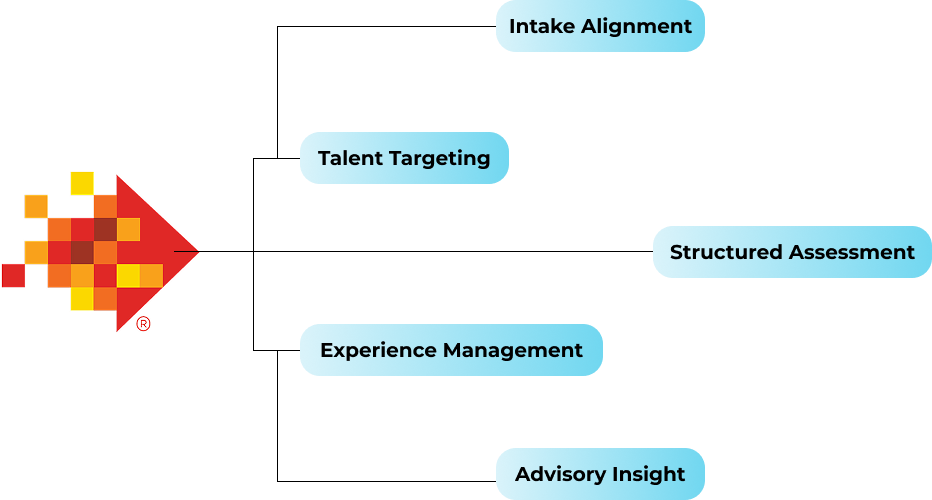
A rigorous direct hire process runs through five stages, each producing a specific output that the next stage depends on. When any one of them is rushed or treated as administrative, the quality of the outcome degrades quietly until it surfaces as a mis-hire or a stalled search.

A job spec tells you what you want. A real intake uncovers what you need.

1. Intake Alignment

Most intake meetings cover the job title and not much else. A rigorous one defines the outcomes the hire needs to deliver and surfaces the cultural context. Compensation reality belongs in this conversation, too, before sourcing begins.

2. Talent Targeting

Build the candidate pool outward from the market, not just from inbound applications. The strongest candidates for most permanent roles are not actively looking.

3. Structured Assessment

Evaluate candidates against defined competencies through behavioral interviewing and skills-based screening. Consistency at this stage is what separates defensible decisions from instinctive ones.

4. Experience Management

Keep the process moving with clear candidate communication and a structured approach to the offer stage. This is where most searches unravel, and where preparation makes the difference.

5. Advisory Insight

Provide compensation benchmarking and talent availability data throughout the search. This layer is what most clearly distinguishes strategic direct hire placement services from resume suppliers.

For senior and executive roles, the same five stages apply, with considerably greater depth at every point. Search horizons are longer, and assessment goes deeper at every stage, with board and stakeholder context shaping the brief from the first conversation.

The Offer Stage: Where Permanent Direct Hires Are Won or Lost

Well-run direct hire staffing services get the right candidate to the offer stage, and what happens next determines whether they actually start.

The offer stage is where permanent hiring loses more ground than most organizations realize. According to SHRM, 52% of employees who accepted a counteroffer from their current employer left within six months, and 80% had departed within a year. The underlying reasons for wanting to leave rarely disappear because of a salary increase. Those reasons surface again, and the organization that invested in a careful search often finds itself having to restart it.

Counteroffers have become a routine part of the permanent hiring landscape at every role level. When a candidate resigns, their current employer faces the immediate cost of replacement. Making a counteroffer is almost always cheaper in the short term. Candidates who are not prepared for that moment often accept without fully thinking through what follows.

Every candidate who goes through your hiring process forms a view of your organization. The ones you do not hire share that view, too.

The candidate experience during the process carries more weight at this stage than most organizations account for. How candidates are treated through interviewing and offer conversations directly shapes their confidence in the decision they are about to make. A slow or disorganized process introduces doubt at exactly the moment commitment is required. 

For TA and HR leaders, the offer stage rewards preparation. Market-aligned compensation reduces the risk of a counteroffer gaining traction. A partner who has already had that conversation with the candidate before the resignation is worth considerably more than a partner who has not. 

Post-Hire Metrics: What to Look For

Reaching the offer stage with the right candidate is one milestone. Knowing that hire delivered what the role needed is what actually matters.

Most organizations evaluate their hiring through direct hire staffing services using metrics that focus on process speed rather than placement outcomes. Time-to-fill measures how long the seat stayed empty, and cost-per-hire measures the search cost. Neither tells you whether the person now in the role was the right choice. According to LinkedIn’s Future of Recruiting research, 88% of TA professionals agree that quality of hire is the most useful recruiting metric available, yet fewer than 40% track it consistently. That gap is where permanent hiring loses accountability after the placement is made.

The placement is only the beginning.
What happens in the first twelve months is the actual result. 

The post-hire signals that close this gap are practical to define. Hiring manager satisfaction at 30 and 90 days captures whether the hire is performing at the required level for the role. Retention at the twelve-month mark indicates whether cultural fit held beyond the initial commitment. Time to full productivity measures how quickly the hire becomes a net contributor rather than a net cost. Together, these signals create a picture of placement quality that process metrics will never surface on their own.

Here are some key post-hire benchmarks to help your organization know what to track and how to target them. 

Metric
What it Tells You
Target
30-day retention
Whether the hire cleared the commitment threshold
95%+
90-day retention
Whether early fit signals are holding
85%+
12-month retention
Whether the hire was genuinely right for the role
70%+
Time to full productivity
How quickly the hire delivered meaningful output
Under 6 months
Hiring manager satisfaction
Whether the process produced what the role required
Tracked at 30 and 90 days
30-day retention
What it tells you: Whether the hire cleared the commitment threshold.
Target: 95%+
90-day retention
What it tells you: Whether early fit signals are holding.
Target: 85%+
12-month retention
What it tells you: Whether the hire was genuinely right for the role.
Target: 70%+
Time to full productivity
What it tells you: How quickly the hire delivered meaningful output.
Target: Under 6 months
Hiring manager satisfaction
What it tells you: Whether the process produced what the role required.
Target: Tracked at 30 and 90 days

Checklist: Auditing Your Current Permanent Hiring Approach

Most TA and HR leaders already sense where their permanent hiring model is under strain before they even consider using direct hire staffing services. Working through this checklist turns that sense into something specific and actionable.

Each area below surfaces a question worth asking before the next critical search begins. Where several areas produce uncomfortable answers, that pattern is worth addressing directly.

Area
Question To Ask
What To Look For
Intake quality
Are hiring managers and recruiters genuinely aligned before sourcing begins?
Vague briefs, repeated calibration calls, late-stage role changes
Sourcing depth
Does the search reach passive candidates, or does it rely on job board applications?
Shortlists built mostly from active applicants
Evaluation consistency
Does the same type of role produce consistent outcomes across teams or regions?
Variable quality, different processes for similar searches
Candidate experience
Do candidates receive clear timelines and timely communication throughout?
Drop-offs, candidate complaints, slow response patterns
Offer acceptance
Are offers being declined or withdrawn after acceptance more than occasionally?
Patterns of late-stage losses or counter-offer acceptances
Early attrition
Are hires leaving within the first 90 days at a rate that concerns the business?
Repeated restarts on the same or similar roles
Quality tracking
Does the organization measure hire quality at 30, 90, and 365 days?
No post-hire data, no feedback loop from hiring managers
Partner accountability
When using external partners, are they held to defined performance metrics?
Vague SLAs, no retention data, no structured review cadence
Intake Quality
Question To Ask:
Are hiring managers and recruiters genuinely aligned before sourcing begins?
What To Look For:
Vague briefs, repeated calibration calls, late-stage role changes.
Sourcing Depth
Question To Ask:
Does the search reach passive candidates, or does it rely on job board applications?
What To Look For:
Shortlists built mostly from active applicants.
Evaluation Consistency
Question To Ask:
Does the same type of role produce consistent outcomes across teams or regions?
What To Look For:
Variable quality, different processes for similar searches.
Candidate Experience
Question To Ask:
Do candidates receive clear timelines and timely communication throughout?
What To Look For:
Drop-offs, candidate complaints, slow response patterns.
Offer Acceptance
Question To Ask:
Are offers being declined or withdrawn after acceptance more than occasionally?
What To Look For:
Patterns of late-stage losses or counter-offer acceptances.
Early Attrition
Question To Ask:
Are hires leaving within the first 90 days at a rate that concerns the business?
What To Look For:
Repeated restarts on the same or similar roles.
Quality Tracking
Question To Ask:
Does the organization measure hire quality at 30, 90, and 365 days?
What To Look For:
No post-hire data, no feedback loop from hiring managers.
Partner Accountability
Question To Ask:
When using external partners, are they held to defined performance metrics?
What To Look For:
Vague SLAs, no retention data, no structured review cadence.

No single area in the red is cause for alarm on its own. A pattern across several is worth taking seriously, particularly where the roles involved carry real business consequences if the hire does not hold.

Checklist: Evaluating Direct Hire Staffing Services

Choosing a direct hire service is a different evaluation from choosing a recruitment vendor, and the questions worth asking reflect 
that distinction. 

Most partner pitches stay at the surface, covering turnaround time and candidate volume. This checklist examines the operating model and
accountability structures that determine whether a partner genuinely extends your TA function or simply adds to your workload. 
Dimension
Questions To Ask
Answers To Look For
Sourcing methodology
How do you reach candidates who are not actively looking?
A defined passive outreach approach with multi-channel capability
Intake rigor
What does your intake process cover beyond the job description?
Questions about outcomes, culture, stakeholder context, and compensation reality
Assessment approach
How do you evaluate candidates against the role beyond a CV review?
Structured competency-based or behavioral interviewing with documented scoring
Market intelligence
Can you provide compensation benchmarking and talent availability data for this role?
Current, specific market data rather than general observations
Candidate experience
How do you communicate with candidates throughout the process?
Defined communication standards and a clear candidate journey
Post-offer management
How do you handle counteroffers and post-acceptance dropouts?
Evidence that counter-offer conversations happen before the resignation, not after
Performance transparency
What metrics do you report on and how frequently?
Proactive reporting on quality indicators, not just activity volume
Guarantee structure
What happens if a placement exits within the first 90 days?
A clear, documented replacement or refund policy
Executive search capability
How does your approach differ for senior and leadership roles?
Deeper assessment, greater discretion, and board-level stakeholder management
AI and compliance
How do you use AI in sourcing and screening, and how do you manage bias risk?
Named tools, documented process, and awareness of relevant hiring regulations
Sourcing Methodology
Questions To Ask:
How do you reach candidates who are not actively looking?
Answers To Look For:
A defined passive outreach approach with multi-channel capability.
Intake Rigor
Questions To Ask:
What does your intake process cover beyond the job description?
Answers To Look For:
Questions about outcomes, culture, stakeholder context, and compensation reality.
Assessment Approach
Questions To Ask:
How do you evaluate candidates against the role beyond a CV review?
Answers To Look For:
Structured competency-based or behavioral interviewing with documented scoring.
Market Intelligence
Questions To Ask:
Can you provide compensation benchmarking and talent availability data for this role?
Answers To Look For:
Current, specific market data rather than general observations.
Candidate Experience
Questions To Ask:
How do you communicate with candidates throughout the process?
Answers To Look For:
Defined communication standards and a clear candidate journey.
Post-Offer Management
Questions To Ask:
How do you handle counteroffers and post-acceptance dropouts?
Answers To Look For:
Evidence that counter-offer conversations happen before the resignation, not after.
Performance Transparency
Questions To Ask:
What metrics do you report on and how frequently?
Answers To Look For:
Proactive reporting on quality indicators, not just activity volume.
Guarantee Structure
Questions To Ask:
What happens if a placement exits within the first 90 days?
Answers To Look For:
A clear, documented replacement or refund policy.
Executive Search Capability
Questions To Ask:
How does your approach differ for senior and leadership roles?
Answers To Look For:
Deeper assessment, greater discretion, and board-level stakeholder management.
AI and Compliance
Questions To Ask:
How do you use AI in sourcing and screening, and how do you manage bias risk?
Answers To Look For:
Named tools, documented process, and awareness of relevant hiring regulations.

A direct hire partner worth engaging will welcome every question on this list. One who deflects or answers only in generalities is telling you something important before the search has even started.

Direct Hire Services: Hiring Timeline 

Hiring timelines slip when there is no shared agreement upfront on what good progress looks like at each stage. The table below defines the standard across both permanent and executive searches and shows where the two tracks diverge in depth and duration.

Phase
Permanent Hiring
Executive Hiring
Brief and activation
Days 1–14: Intake completed, market mapped, first shortlist delivered
Weeks 1–2: Executive brief captures strategic context and board-level expectations. Targeted research and market mapping begin immediately.
Assessment
Days 15–45: Structured interviews conducted, offer prepared with compensation benchmarking, counter-offer conversation completed before resignation
Weeks 3–6: Longlist developed through discreet outreach, narrowed through capability assessment to a structured shortlist
Offer and onboarding
Included in days 15–45 above
Weeks 11–14: In-depth referencing completed, offer negotiated against current market data, onboarding planning begins before start date
Hire and stakeholder alignment
Days 45–90: Hire starts, 30- and 60-day check-ins conducted, early retention signals tracked and shared
Weeks 7–10: Shortlist presented with detailed profiles, stakeholder interviews managed end-to-end by the search partner
Ongoing
Market intelligence, passive pipeline development, and quarterly performance reviews continue between searches
Relationship continues post-placement with senior stakeholder reviews and successor pipeline building
Phase: Brief and Activation
Permanent Hiring:
Days 1–14: Intake completed, market mapped, first shortlist delivered.
Executive Hiring:
Weeks 1–2: Executive brief captures strategic context and board-level expectations. Targeted research and market mapping begin immediately.
Phase: Assessment
Permanent Hiring:
Days 15–45: Structured interviews conducted, offer prepared with compensation benchmarking, counter-offer conversation completed before resignation.
Executive Hiring:
Weeks 3–6: Longlist developed through discreet outreach, narrowed through capability assessment to a structured shortlist.
Phase: Offer and Onboarding
Permanent Hiring:
Included in days 15–45 above.
Executive Hiring:
Weeks 11–14: In-depth referencing completed, offer negotiated against current market data, onboarding planning begins before start date.
Phase: Hire and Stakeholder Alignment
Permanent Hiring:
Days 45–90: Hire starts, 30- and 60-day check-ins conducted, early retention signals tracked and shared.
Executive Hiring:
Weeks 7–10: Shortlist presented with detailed profiles, stakeholder interviews managed end-to-end by the search partner.
Phase: Ongoing
Permanent Hiring:
Market intelligence, passive pipeline development, and quarterly performance reviews continue between searches.
Executive Hiring:
Relationship continues post-placement with senior stakeholder reviews and successor pipeline building.

Direct Hire Staffing Services:
What a Real Partnership Looks Like 

Every firm in this space will describe itself as a partner rather than a vendor. The distinction worth making is how they behave between searches when no active brief is running, and no one is watching the scorecard.

When a search ends with a transactional supplier, institutional knowledge walks out with the recruiter. The brief gets rebuilt from scratch, and the next search starts with no advantage over the first. A genuine TA extension holds that calibration across engagements, and the recruiter who ran the last search brings prior shortlist insight into the next brief without being asked.

The behaviors that separate the two are observable before a search begins.

Transactional Supplier
Waits for a requisition before engaging
Rebuilds the brief from scratch each time
Reports on activity: CVs sent,
interviews booked
Presents candidates who match
the job description
Disappears after the hire starts
Measures success at offer acceptance
Strategic TA Extension
Proactively shares market intelligence between searches
Retains calibration from previous placements
Reports on outcomes: retention, quality of hire, offer acceptance
Challenges the brief when the market does not support it
Conducts post-placement check-ins and flags early retention risks
Measures success at twelve-month retention
Comparison Area: Engagement Style
Transactional Supplier:
Waits for a requisition before engaging.
Strategic TA Extension:
Proactively shares market intelligence between searches.
Comparison Area: Role Understanding
Transactional Supplier:
Rebuilds the brief from scratch each time.
Strategic TA Extension:
Retains calibration from previous placements.
Comparison Area: Reporting Focus
Transactional Supplier:
Reports on activity: CVs sent, interviews booked.
Strategic TA Extension:
Reports on outcomes: retention, quality of hire, offer acceptance.
Comparison Area: Candidate Evaluation
Transactional Supplier:
Presents candidates who match the job description.
Strategic TA Extension:
Challenges the brief when the market does not support it.
Comparison Area: Post-Hire Support
Transactional Supplier:
Disappears after the hire starts.
Strategic TA Extension:
Conducts post-placement check-ins and flags early retention risks.
Comparison Area: Success Measurement
Transactional Supplier:
Measures success at offer acceptance.
Strategic TA Extension:
Measures success at twelve-month retention.

For TA and HR leaders, the practical test is straightforward. Ask prospective direct hire recruiting services what they know about the market for this profile right now and what they would change about your brief.

A strategic partner answers both with specificity and market data. One who responds only in generalities about network size and speed is already telling you something important.

SPECTRAFORCE’s direct hire services and executive hiring model sit at the strategic end of that spectrum. The intake goes deeper than most, and the advisory layer runs throughout the search. Each engagement builds institutional knowledge that the next one draws on directly.

Want to Make Your Direct Hires Permanent?

Most organizations use this guide to sharpen their thinking on the use of direct hire staffing services and align internal stakeholders on what good looks like before engaging an external partner. If the questions it has raised feel worth exploring further, the next step is a 15-minute discovery call.

The conversation has a simple purpose: to understand where the current hiring model is under strain and whether there is a fit worth taking forward. There is no pitch and no proposal until both sides decide there is a reason for one.

SPECTRAFORCE supports organizations across the full range of permanent hiring complexity.

The model supports both single specialist searches and sustained direct hire partnerships across multiple functions and markets.

40,000+ placements · 2,000+ hiring experts ·
20+ years of experience · 10+ international offices ·
150+ Fortune companies served 

40,000+ placements · 2,000+ hiring experts · 20+ years of experience · 10+ international offices · 150+ Fortune companies served