
Companies today face the growing challenge of adapting to shifting market demands, tight deadlines, and increasingly complex projects. At the same time, the need for specialized skills is more urgent than ever. Hiring permanent employees for every position may no longer be the most effective solution, especially when businesses need specific expertise for a defined period or to meet short-term objectives. This is where staff augmentation becomes a strategic approach to workforce management.
Staff augmentation differs from traditional hiring because it allows companies to bring in skilled professionals on a temporary basis, bypassing the long-term commitments of full-time hires. Whether it’s IT specialists, compliance officers, or project managers, staff augmentation enables organizations to tap into a flexible, scalable talent pool without the overhead of permanent staffing. But like any business strategy, it’s not without its challenges.
Understanding when to leverage staff augmentation and when not to is key to making it work as part of a broader workforce strategy.
Also read: Staff Augmentation vs. Direct Hire: CFO’s Guide to Cost Comparison
Staff Augmentation as a Long-Term Workforce Strategy
Staff augmentation is often mistakenly seen as a short-term or reactive solution. However, when strategically implemented, it can serve as a powerful workforce lever, driving business outcomes across industries. From scaling quickly to bringing in specialized expertise, it enables companies to bring in talent on-demand, without the burden of full-time hires.
The key distinction here is that it helps optimize your workforce strategy to meet specific, time-sensitive objectives. Whether you’re in IT, healthcare, or logistics, the model can work for roles that demand specialized expertise without the need for permanent positions.
For example, an e-commerce company needing to speed up its product launch could utilize staff augmentation to bring in seasoned developers and marketers, while leaving the more permanent positions within the company intact.
Understanding When Staff Augmentation Isn’t the Best Option
Even the most robust workforce strategies need to consider the risks. While it can offer great flexibility, it’s not without its potential pitfalls. When deciding whether it’s the right model, it’s crucial to consider the larger picture, particularly in the context of enterprise-scale operations.
Governance and Accountability
For large-scale organizations, especially those in highly regulated industries like healthcare and BFSI, there’s an increased need for governance and accountability. The staff augmentation model, which relies on external contractors, can pose a challenge here. While it’s a great way to access specialized expertise quickly, it’s important to understand that managing external resources, ensuring quality control, and maintaining compliance can become more complex as your team grows.
For instance, a healthcare provider adding staff augmentation for a specific compliance project will need to be highly selective about which contractors are brought on. These contractors must align not just with the project’s needs, but also with the stringent requirements of the healthcare sector, which involves a level of oversight that differs from that of direct hires.
Also read: Global Workforce Compliance & Risk Management for Enterprise Hiring Programs
Short-Term Commitment vs Long-Term Needs
Another potential risk is that staff augmentation can sometimes be seen as a band-aid solution rather than a long-term workforce strategy. If a company is constantly relying on external resources to manage routine functions, it may lose out on the advantages of building a cohesive internal team that understands the company’s culture and long-term objectives. It should not be a crutch but a lever that complements the organization’s growth trajectory.
How Staff Augmentation Fits Into Modern Workforce Strategy
To truly understand when to use staff augmentation, it’s critical to look at the modern workforce strategy. Today’s workforce is increasingly remote, diverse, and spread across geographies.
It fits perfectly into this landscape because it allows companies to access global talent without the long-term commitment or administrative overhead that comes with traditional hiring. Whether you need IT specialists to design software or healthcare professionals to help during peak times, staff augmentation offers an agile approach.
Let’s consider a real-world scenario: A fast-growing tech startup needs to scale its team to meet the demands of a new product launch. Instead of going through a lengthy hiring process for permanent employees, the company can bring in experienced developers and designers on a short-term contract, saving valuable time. This allows them to focus on product development while avoiding the risk of overhiring, which could lead to inefficiencies down the road.
Also read: Staff Augmentation vs Managed Services: How to Choose the Right Model
The Staff Augmentation Decision-Making Framework
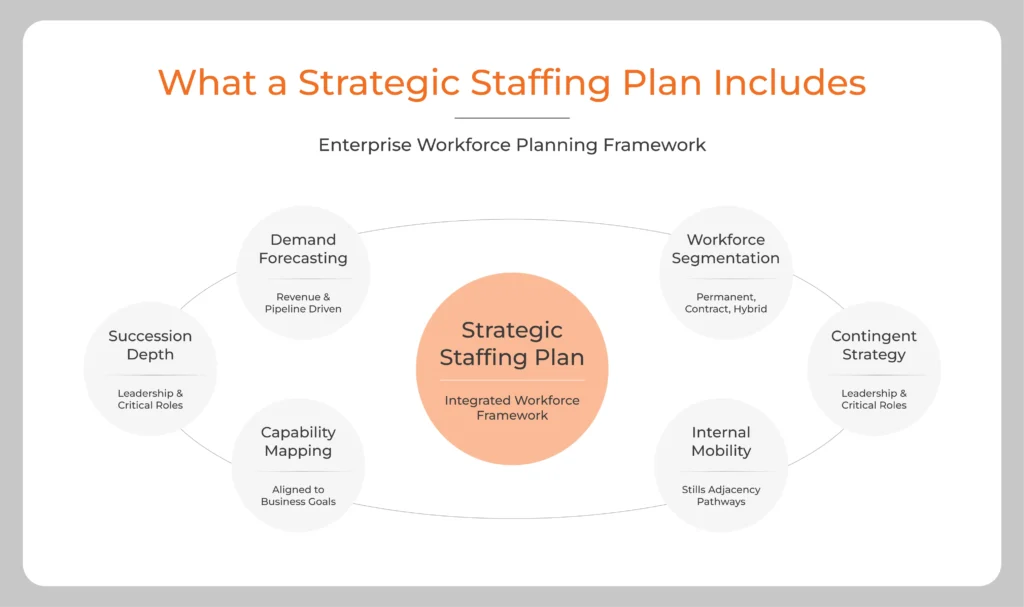
When deciding whether staff augmentation is the right choice, a structured framework can help guide the decision-making process. Below are some critical factors to consider:
- Time Sensitivity: If your company needs to rapidly scale teams or fill specific skill gaps, it offers flexibility without the long lead time of traditional hiring.
- Specialized Skills: Use staff augmentation for roles that require specific expertise that your current team may not have, such as advanced IT skills, compliance knowledge, or sector-specific experience.
- Cost Considerations: While staff augmentation can be more cost-effective than hiring full-time employees, especially when considering long-term benefits like reduced overhead and employee benefits, companies should also be mindful of bill rates and how they scale with the demand for talent.
- Control and Oversight: Consider your company’s capacity to manage external contractors and the level of governance you need. Staff augmentation works best when your company can maintain control and provide guidance, but it may not be suitable for companies looking for more hands-off solutions.
Real World Applications of the Staff Augmentation Model
The global IT staff augmentation services market is projected to grow significantly, from USD 299.3 billion in 2024 to USD 857.2 billion by 2032, with a compound annual growth rate (CAGR) of 13.2%, underscoring the increasing reliance on staff augmentation in tech-heavy industries. Let’s explore how staff augmentation works in different sectors:
- Technology: In technology-driven sectors, it helps scale development teams during periods of rapid growth. For instance, a software company may need additional developers to meet product-launch deadlines without having to hire permanent staff.
- Healthcare: During seasonal surges (such as flu season), hospitals may rely on staff augmentation to bring in extra medical professionals, such as nurses or physicians, for short-term assignments.
- BFSI (Banking, Financial Services, and Insurance): In a regulated environment, companies in the BFSI sector can use staff augmentation to bring in specialized compliance experts without the overhead of hiring full-time employees.
Also read: Professional Services Staffing: Building Agile, Client-Ready Teams
The Bottom Line
Staff augmentation can help companies meet their evolving workforce needs. Whether it’s about scaling quickly during peak periods, accessing specialized talent for a project, or maintaining operational flexibility, it has the potential to drive outcomes when deployed strategically.
However, it’s crucial to approach it with a clear understanding of its strengths and risks. Organizations must weigh the trade-offs carefully, particularly in enterprise-scale environments, and ensure they have the necessary infrastructure to manage augmented teams effectively. It is a good idea to keep it as a part of the broad enterprise workforce strategy rather than relying on it completely.
As businesses continue to evolve, staff augmentation will likely play an increasingly important role in building adaptive, globalized teams. By integrating staff augmentation into a larger workforce strategy, businesses can not only achieve agility but also maintain the competitive edge necessary for long-term success.
Ready to scale your teams with the right expertise at the right time? Let SPECTRAFORCE help you implement the most effective staffing solutions tailored to your business needs. Contact us today to learn more.
FAQs
Staff augmentation refers to bringing in temporary or contract workers to supplement your internal team, while outsourcing involves delegating entire processes or functions to an external company. The key difference is that staff augmentation provides more direct control over the work being done.
Staff augmentation can be more cost-effective than full-time hiring because it avoids the overhead costs associated with permanent employees, such as benefits and long-term compensation. However, the hourly rates for contract workers may be higher than the equivalent salary for full-time staff.
Common roles for staff augmentation include IT developers, project managers, HR professionals, and compliance experts. These are typically positions that require specialized skills for short-term needs.
Yes, staff augmentation teams can work remotely or globally, which provides access to a broader pool of talent. Many companies now use global talent to fill specific roles as part of their staff augmentation strategy.
No, staff augmentation can be used for a wide range of roles across industries, including healthcare, finance, logistics, and professional services. It’s not limited to IT positions.